You closed the cover of the book you’d eagerly anticipated for weeks and, well, that was an experience.
As if they typos weren’t enough, the story was full of inconsistencies and confusion, too little confirmation, too many cliches. Yes, you finished it, but you honestly don’t know why so read “Rogues, Widows and Orphans” by Rebecca Lee. It may tell you something about all the books you read.
Admit it: sometimes, when you’re immersed in a book and you come up for air, you wonder what kind of person created that tale. What went into making the book in your hands? How many times was it written or re-written, who made it into a book you love? Or hate?
No pun intended, it’s a long story.
It begins before the Gutenberg Press, when scribes wrote documents by hand, scraping the ink away when oopses were made. Later printers created lines of words, letter by letter by hand, and mistakes were easily made then, too. Not even the Bible would escape typos.
Much to a reader’s irritation and even with spell-check, there are still errors.
What about “Ick Lit”?
Says Lee, “… enjoyment of bad writing brings its own very specific pleasures…”
We can praise a great book to the heavens, but it’s more fun to insult a bad book or one that defies “the ‘rules’ of writing,” one with the thinnest of plots or that ends awfully. And yet, there’s always been a place for abysmal writing: the Victorians loved it. Go figure.
Books have been ruined by censorship and banning, which is generally nonsensical and easily undone. Sentences can be stolen, in their entirety or in bits and pieces, plagiarized and “adapted” by anyone, even famous authors. Books can be collected (bibliophiles) , hoarded (bibliomaniacs), and stolen (biblioklepts). And they can be digitized.
Just remember, says Lee: “books are portable, accessible and durable,” but “not even e-books are immortal.”
So you say your TBR pile is full of genres you love and you read for content, not style? You want a story, no matter how it’s told.
Then “Rogues, Widows and Orphans” probably isn’t your kind of book.
Here, author Rebecca Lee, who’s a senior editorial manager at a major publisher, speaks directly to serious book people and readers who make reading a true event. If you like to gaze at the cover of a book, note the edges, smell the pages, and savor the delicious anticipation of a story unread, you’ll love the way Lee talks to you. If typos are an aggravation, she’s with you. If bad books make you shake your head, she feels your pain. She knows the nooks and crannies of bookdom, and she shares.
Which all means that, though it can be enjoyed by anyone, this is a book for people who truly love books, anyone with a home library, or aspirations for such. If you’re obsessed with books, you’ll love “Rogues, Widows and Orphans.” If you’re casual about reading, this may not be the best experience.
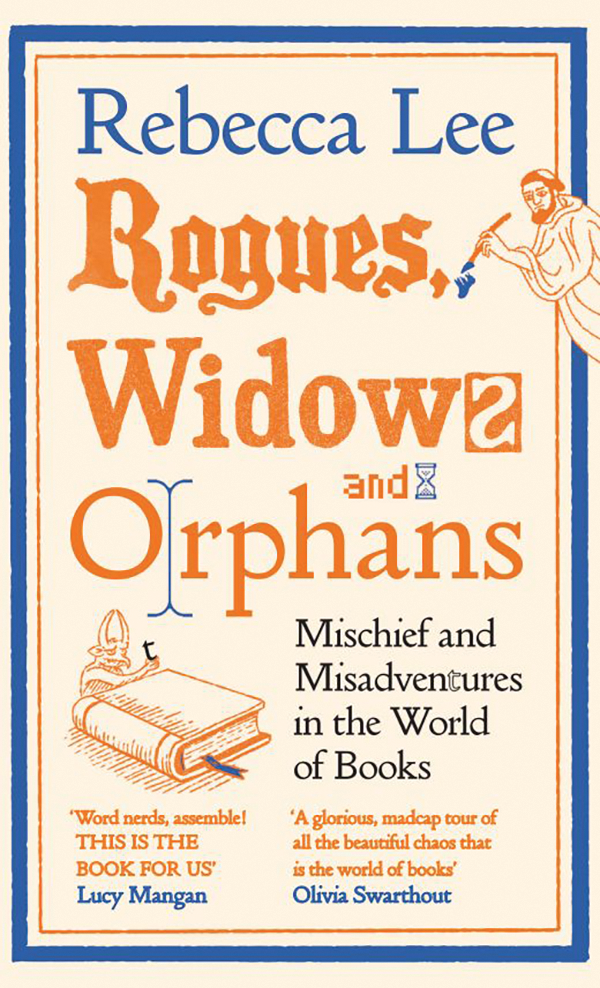
“Rogues, Widows and Orphans: Mischief and Misadventures in the World of Books” by Rebecca Lee
c.2026, Brandeis University Press
$29.95 • 295 pages