The weather changes, and the local fishermen switch to Bass. But many folks continue to reach out. I am not an expert on fishing, but I know a few things about our Pennsylvania trout. They will send a picture and ask a simple question. STOCKED or WILD? It is getting awfully difficult to determine the answer. I will sometimes look at my old notes from ICTHYOLOGY 345. The online forums are no different. The posts and threads are rather interesting. They are split 50/50. The responses are downright hilarious. Who knows?
The PA Fish and Boat Commission, as well as several others, have gotten quite good at their craft. They have raised and stocked some beautiful fish over the past few years. Making it tough to tell. The nutrients and feed they use in the nursery are now legit. Honestly, a fish is a fish. And I really don’t care. Catching a wild Brown in the backyard is pretty neat. Here are a few things I consider before making the call.
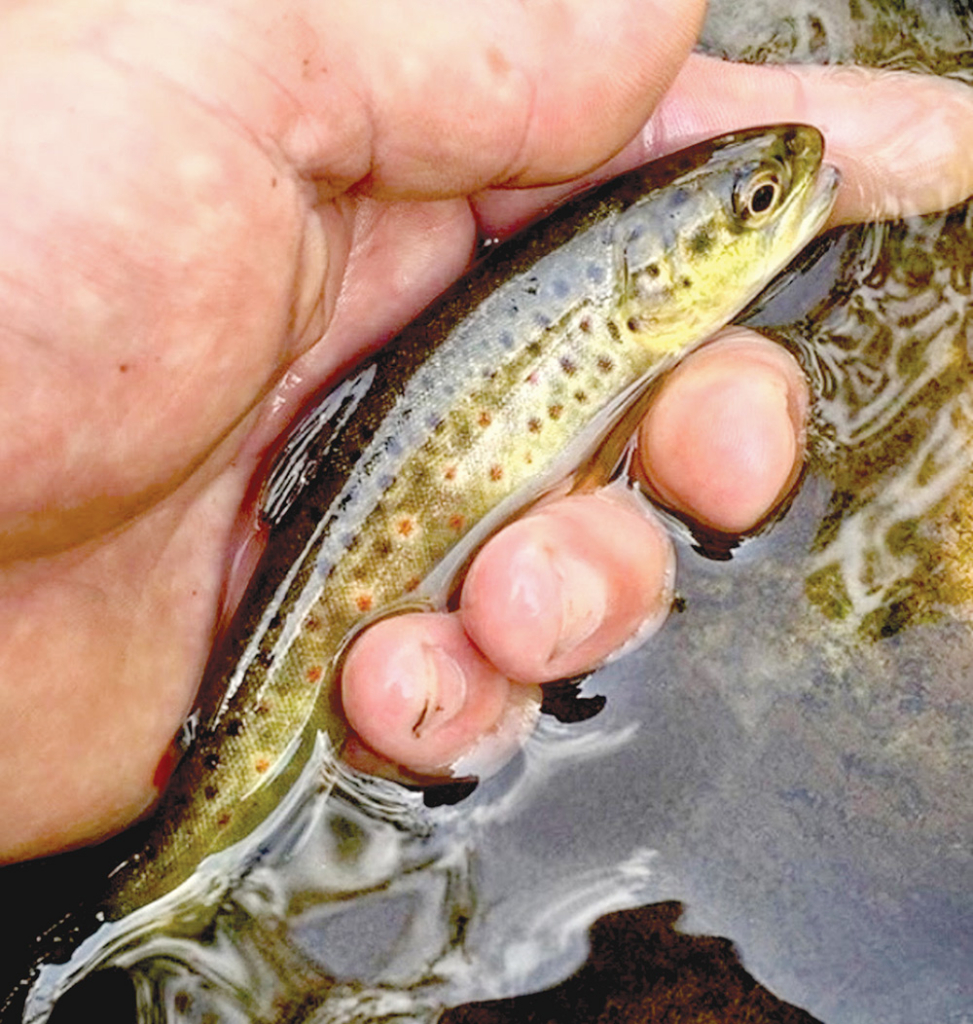
Location is key. Perhaps it is the most obvious. Wild Browns are found in healthy waterways. These trout are migratory and will travel some distance. But your location is a good indicator of whether your fish is wild or stocked. Sure, they can grow big, but most of the wilds I catch locally are small. Like the photo above.
A majority of the wild Browns have a black spot behind the eye. Take it to the bank. If it has one, there is a good chance this fish was born in the stream. Please don’t confuse this with a blue spot. These markings are common in both wild and stocked trout. A holdover or a seasoned fish may develop these characteristics over time. Again. It is rather difficult to tell. Perhaps the only one that knows is the fish itself.
Wild trout tend to be firm and lack the “belly” seen in stocked fish. Hatchery fish are fed high-protein pellets that help them grow. They eat well and tend to be more robust. Take a good look at the fins. Hatchery fish get beat up in the raceways where they live. There are more New York Knicks and knacks. They will sometimes grow in a distorted manner. These fins appear thick and feel rubbery. Wild stream-bred fish tend to have perfect fins.
A stocked Brown will have more gray tones throughout its body. A wild fish exhibits more vibrant colors. They tend to have a yellowish bottom, bright red spots, and a distinct, red-tipped adipose fin. But be careful. Once a stocked fish gets acclimated, their colors will mature within a few months of stocking. I try to look at the overall coloration of the fish. Not just one part in particular.
Remember that no two trout streams are the same. Determining whether a fish is wild or stocked is a fun debate. Please continue to send me those photos and questions. A fish is a fish. Regardless of the answer. Cheers.