As we move into these midsummer days, I find a couple of wildlife developments that seem to interest those of us who hunt.
Sure, I’m always on the lookout for wildlife in my travels, but when this time of year rolls around, I find myself especially interested in spotting turkeys; not just gobblers but also poults or newborn turkeys.
I want to know where the gobblers are hanging out, but I’m also interested in seeing those poults and how many there are to give me some idea of what to expect come fall.
Over the past few weeks, I’ve been fortunate to spot hens and poults at several different locations in my travels. In one location, I’ve been seeing two hens with a total of five poults; four about the size of a grouse and one poult much smaller. The most poults I’ve seen so far is about a half dozen with a hen.
So how successful are Pennsylvania’s turkeys when it comes to nesting and raising poults? Pennsylvania’s wild turkeys face a pretty tough nesting season, with about 30 percent to 62 percent of the hens successfully hatching a clutch. Even after they hatch, only about 25 percent of the poults will survive past four weeks. That may not look like very good nesting success, and there are several reasons for that.
Predators like raccoons, skunks, and foxes are known to frequently raid a turkey’s ground-level nesting site. Snakes will also eat the eggs.
Good ground cover is very important for creating a safe, well-hidden nesting site. Other factors that can hurt reproduction are weather conditions. Cold, wet springs and summers can be lethal for young poults, while dry conditions will generally boost survival rates.
Of course, I’m also interested in seeing newborn fawns as we move into the summer days, as that will help maintain a healthy deer herd, but, to be honest, I get a bit more excited when I spot those developing antlers still in velvet.
Antlers generally begin to grow in March or April, and in their early stages of development, they are covered with a skin called velvet. This velvet is covered with soft hairs and contains blood vessels which supply the necessary nutrients for the growing antlers. Come August or early September, antler growth ceases, and the bucks begin to shed or rub off the velvet.
Of course, we hunters are quick to be on the hunt for those small trees or saplings where the bucks have been rubbing and scraping off the velvet.
What’s exciting right now is spotting those bucks still in velvet and trying to evaluate what those antlers are going to look like when the fall arrives.
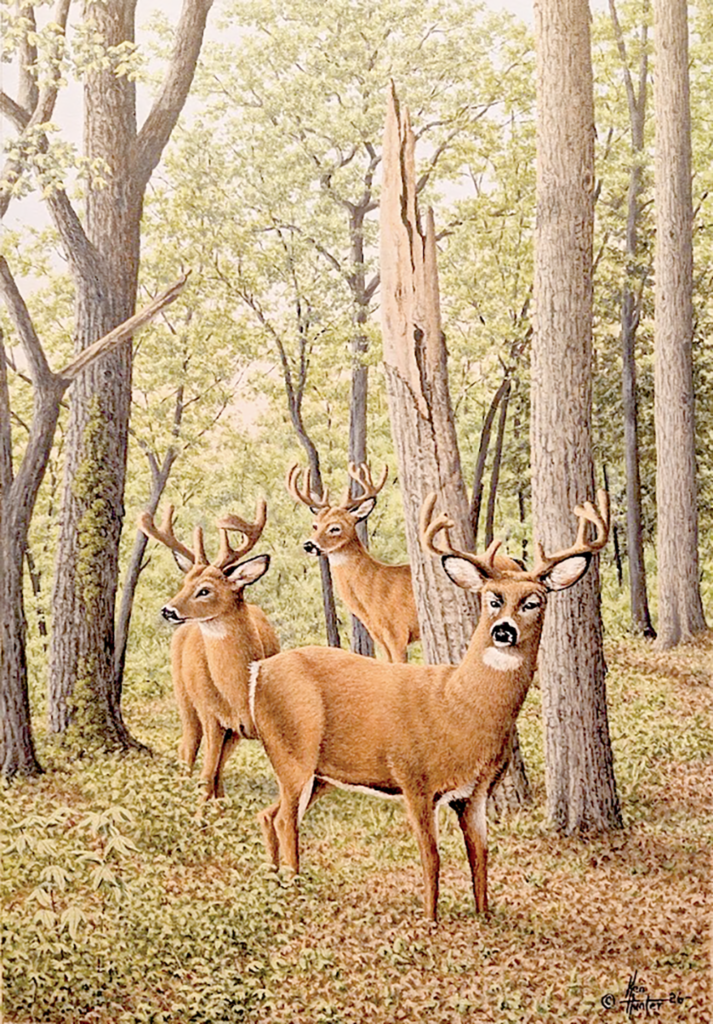
I’ve been fortunate to see several bucks in velvet in my travels and on several cameras. I recently spotted three really nice bucks together and still in velvet, of course, but from what I saw I would be happy with any one of them come deer season.
Needless to say, I will continue to be on the lookout for those poults that will add to our fall flocks and for those developing antlers still covered in velvet.